
Blockchain
Blockchain prediction enhanced through AI delivers smarter forecasts
Thursday, September 25, 2025

|
Austin Harris |

AI tools are being applied across finance, healthcare, energy, and supply chains, where blockchain prediction enhanced with AI supports more accurate and verifiable forecasting for risk management and operational planning.
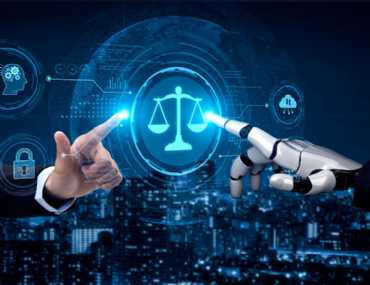
Blockchain and artificial intelligence (AI) are two of the most studied technologies in modern computing. Each brings distinct strengths: blockchain provides transparency and security through decentralized ledgers, while AI delivers advanced capabilities in data analysis, learning, and prediction. When combined, the two technologies are positioned to improve how forecasts are created and validated across multiple sectors.
The Blockchain Council, an educational body focused on emerging technologies, highlights how AI can strengthen blockchain-based systems to make predictions that are more reliable and actionable. This integration is not limited to financial markets but extends to healthcare, supply chains, energy management, and other industries that rely on accurate forecasting.
How AI supports forecasting in blockchain systems
AI models are designed to recognize patterns in large datasets. When integrated with blockchain, these models can process data stored in distributed ledgers with greater efficiency. Blockchain ensures the integrity of data, while AI transforms that data into predictive insights.
For example, in financial forecasting, blockchain records can provide verified transaction histories. AI algorithms then analyze these histories to detect market trends or assess investment risks. The combination reduces the possibility of tampering while allowing predictions to be updated in near real time.
AI-enhanced blockchain can also support scenario planning. By running simulations using historical data and projected variables stored on the blockchain, organizations can model potential outcomes more confidently. This approach allows businesses to test strategies under different conditions before implementing costly or irreversible decisions.
Applications beyond finance
The potential of AI-enhanced blockchain forecasting extends well beyond capital markets. In healthcare, predictive models can be trained on patient records and pharmaceutical supply data stored securely on blockchain networks. This can help anticipate medicine shortages, predict disease outbreaks, or optimize resource allocation in hospitals.
In supply chain management, blockchain ensures that shipping and production records remain accurate. AI can use this information to anticipate delays, calculate demand fluctuations, or optimize logistics routes. Such predictive capacity helps businesses respond to risks earlier and maintain efficiency.
Emerging applications also include energy management, where AI can forecast consumption patterns using decentralized smart meter data stored on blockchain networks. In agriculture, blockchain-based crop and soil data combined with AI can predict yields, identify potential threats to food security, and support more efficient resource use.
The role of transparency and trust
One of the challenges in traditional predictive analytics is the lack of transparency in how forecasts are generated. By pairing AI with blockchain, the process becomes more auditable. Stakeholders can trace data sources and validate that the information has not been altered. This trust factor is particularly valuable in sectors where decisions affect large populations, such as public health or energy infrastructure.
Transparency also benefits regulators and policymakers. Verified blockchain records combined with AI-driven forecasts provide clearer grounds for evaluating risks and setting policy directions.
Ethical and operational considerations
While the integration of blockchain and AI has clear advantages, it also raises questions about data governance and accountability. Blockchain ledgers preserve information permanently, which may conflict with privacy concerns, particularly in healthcare and personal finance.
There is also the issue of algorithmic bias. AI predictions are only as reliable as the datasets used to train them. Ensuring diverse and representative data inputs is critical to maintaining fairness in forecasts. Blockchain can help by securing provenance and maintaining traceability, but the responsibility for ethical implementation still lies with system designers and institutions.
Regulatory frameworks are gradually adapting to the combination of AI and blockchain, particularly in sectors like finance, healthcare, and energy. These frameworks emphasize both transparency in AI decision-making and compliance with data protection requirements, ensuring that predictive models respect legal and ethical standards.
Future directions in research and adoption
Research into blockchain-AI integration continues to expand. Pilot projects in sectors such as insurance, logistics, energy, and agriculture are already testing predictive models that rely on decentralized data sources. Educational organizations, including the Blockchain Council, are promoting knowledge-sharing and training to encourage responsible adoption.
As these technologies mature, enterprises are expected to incorporate them into decision-making processes. Analysts suggest that the convergence could lead to forecasting tools that are not only more accurate but also more trusted by the public. Interdisciplinary collaboration between AI researchers, blockchain developers, and industry experts is increasingly seen as essential to achieve practical, scalable solutions.
Blockchain prediction enhanced with AI supports smarter forecasts
The use of AI in blockchain-based prediction systems reflects a broader trend toward data-driven decision-making. The synergy between blockchain’s verifiable records and AI’s capacity for pattern recognition provides a foundation for more accurate forecasts. While challenges remain around privacy, bias, and governance, ongoing research and adoption indicate that the pairing of these technologies will continue to influence financial markets, healthcare planning, energy management, agriculture, and supply chain resilience. As organizations increasingly rely on verified and analyzable data, blockchain prediction enhanced with AI supports smarter, methodical, and auditable forecasting that helps anticipate risks and opportunities across diverse sectors.

Become a subscriber of App Developer Magazine for just $5.99 a month and take advantage of all these perks.
MEMBERS GET ACCESS TO
- - Exclusive content from leaders in the industry
- - Q&A articles from industry leaders
- - Tips and tricks from the most successful developers weekly
- - Monthly issues, including all 90+ back-issues since 2012
- - Event discounts and early-bird signups
- - Gain insight from top achievers in the app store
- - Learn what tools to use, what SDK's to use, and more
Subscribe here